‘”Not all those who wander are lost.” – J.R.R. Tolkien…
…Sometimes, we are though! When we are, it’s a good idea to make things easier for you to get back on track. A bit of planning can really help with your adventures, and everyone loves a good travel hack. Here are 15 of the best that have been tried and test by me, and countless others that will make your trip smoother, more organized, and a lot more fun — whether you’re a seasoned diver or just starting out:

1. You don’t need to carry all your gear in your carry-on! Whilst it can help (and if you have the space), line the bottom of your bag with your dive fins, followed by more delicate things such as mask and regulator, and then your BCD on top. This way, the more fragile items are sandwiched between the heavier duty gear.
2. A travel tip list wouldn’t be full without a flight travel hack. I’m always checking the flight cancellation policy right before I book. With companies like easyJet, you can get an (almost) 100% refund if you need to cancel your flight within 24 hours of booking it. So, if you find some great flights, bite the bullet and take them! Just make sure to get in touch with them within the time-frame if your plans fall through.
3. Another reason to check the flight policy is that many companies will let you change the flights and just pay the difference. There’s 2 things you can do to benefit this system. Insure your original flights, so if you find them cheaper as you get closer, take the cheap ones and claim back for the original booking. (It goes without saying to check your insurance policy as well to make sure you don’t get stuck with 2 sets of flights!)

4. Dive Insurance! Policies like DiveAssure offer full coverage if you need to cancel your holiday or your trip. It’s not so much a travel hack, rather than just smart holiday planning. If you can afford to lose $10k on that dream Galapagos trip because of a last minute issue, then no worries! For the rest of us, it’s worth the extra to take out a solid policy.
5. Choose versatile clothing and accessories that serve multiple purposes. Lightweight top an bottom layers fit easily into luggage, and can even be stuffed into fins and BCD pockets for travel (nobody really worries about ironed clothes on a dive trip, right?!)
6. When booking your flight, make sure to check or enquire with the airline if they have special rates for sports equipment (particularly dive gear). Often, airlines will charge a lower rate, and in some cases, will even allow a certain amount for free. This can save you $$$ when booking air travel!

7. Keep things organized by separating dive gear from clothes using waterproof packing cubes or compression bags. Air is wasted space and you can always keep the weight down by getting rid of that dead space.
8. You can’t beat having a “save a dive” kit. Spare fin straps, mask straps, and O-rings are essential— they’re light and often hard to find in remote dive destinations. This travel hack has served me well on many holidays, as you can rely on yourself if something goes wrong. All your bits should fit nicely into a mask box, so try to keep it simple. Hotel coffee sachets are also a must (if you’re a caffeine fiend like myself).
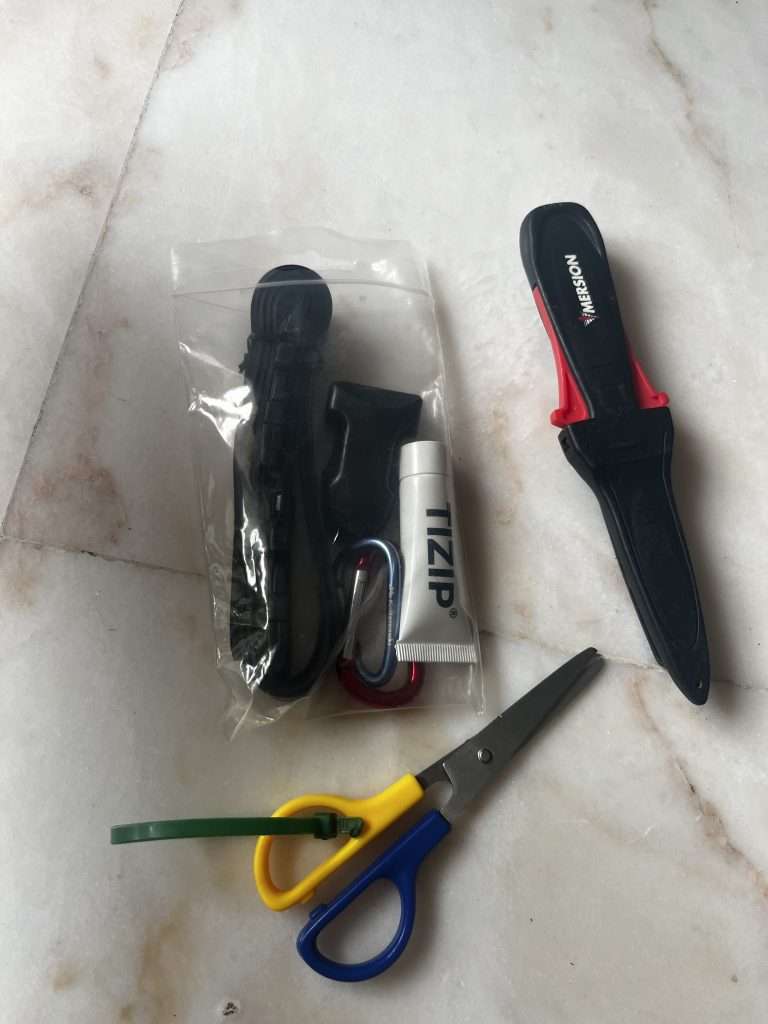
9. Quick-Dry Towel & Sarong are essential for drying off quickly, covering up post-dive, or even using as a makeshift shade or pillow.
10. Use tools like Google Flights, Skyscanner, or Hopper to set alerts for destinations like that are normally pricey like Raja Ampat, Maldives, or Mexico.
11. Save digital copies of your certification cards, travel insurance, and medical clearance on your phone and in the cloud. Also have a small folder for photo copies of your passport, dive licences and dive insurance certificates and anything else you might need quick access to on your phone.
12. Whilst it’s great to get off-grid for a while, and if you’re in a remote area you might not have much choice, give yourself peace of mind by checking with your phone company before about a phone/data plan. You might save yourself a few cents arranging one, or alternatively, pick up a local SIM card when you reach the land in your final destination, just for emergencies.

13. Many dive resorts in remote areas don’t accept cards, (especially local taxis and tuk-tuks!) There may be no ATMs ad if there are, they normally charge you a hefty fee for withdrawals. Bring cash for tips, rentals, local meals, and things like tips.
14. Flights out of remote islands may be limited to specific days. Build in surface interval days to avoid flying too soon after diving.
15. Last, but not least, always carry a roll of toilet paper, or even a few sheets if you can manage. You never know when it might come in handy! 😉