Photo: David Clode
What is more attractive that a very attentive and caring father? Seahorses can tell you all about this.
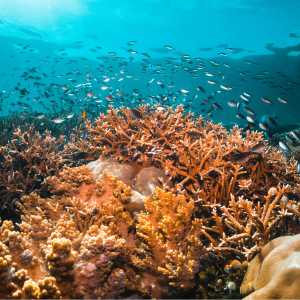
Seahorses, mainly found in shallow tropical and temperate salt water throughout the world, live in sheltered areas such as seagrass meadows, estuaries, coral reefs and mangroves. They range in size from 1.5cm to 35cm and they are named for their equine appearance, with bent necks and long snouted heads with a distinctive trunk and tail.
Seahorses are extremely monogamous, so faithful through the breeding season (five to six months) that once they’ve found a mate, very little can separate them, even if one gets injured, the other will patiently wait for them to heal, rather than search for a new mate. The female can only carry ripe eggs for about two or three days before she must get rid of them and during this time, she must find a partner who she can rely on. It’s important she chooses the partner carefully because, curiously, male seahorses are the ones who get pregnant, developing the embryos inside a warm pouch that bathes the eggs in fluid and protects them until they hatch.
Males and females court each other over five-to-six-month breeding season to better coordinate themselves for the breeding time. A male might approach a potential mate with his head bowed down (such a gentleman!) and flutter his fins rapidly. He also dilates the opening on his belly where the eggs will be stored to show off to the female. He might also lighten the color of his stomach to show her the pouch. If the female likes it, she will reciprocate by similarly lightening color and owing her head in return.
Should they happen to see each other as a good fit, they will meet at the original meeting spot for the following months, wrapping their tails around a blade of grass and circling it like romantic maypole dancers. This will last a few minutes, before they skip to another blade of grass to repeat the process.
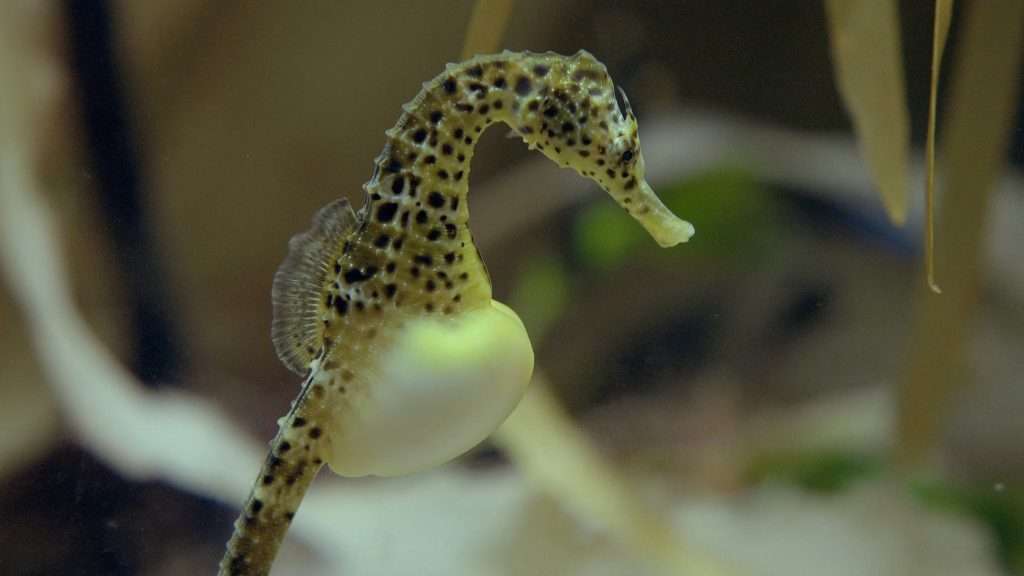
Photo: Oleksandr Sushko
Once the female has developed her eggs, she gives them to the male. He will eventually give birth, to potentially thousands of baby seahorses (however few will survive into adulthood) projecting them into the surrounding water, propelling them into a life of their own.
Upon giving birth, the male, in full macho spirit, is ready to go again. He’ll signal to the female the following day by more “encouraging” displays of affection (a step up from his “gentle hand-holding behaviour” displayed previously). Meanwhile, the female has been using her intuition to figure out when is the right time to produce more eggs. She’s been cooking more buns, ready to give him for the next batch. They’ll repeat this process over a six-month period every two weeks approximately, meaning they can produce thousands of baby seahorses each breeding season.
But, hold your horses…
Whilst this sounds like a lot, they face immense pressures from the fishing industry. Dried seahorses are used for trinkets and ground up to be used for traditional medicine. In some places, they are used as an aphrodisiac (although their actual courtship lasts around 5-10 seconds, it begs belief). On top of that, they are caught to fill live aquariums, disrupting natural breeding habits. Bottom trawling and bad boat practices in harbours are also terrible for species survival, considering the habitats of the creatures are where these activities take place.
Scientists have captured and are protecting many male species, to preserve them in case of a full-blown extinction, which is good, however other practices can be stopped to avoid this from happening.
So, the next time the debate comes up of “what hurts more, having a baby or being kicked in the jewels”, just count yourselves lucky that you’re not a male seahorse, who I’m sure would be actually have the answer to this question!