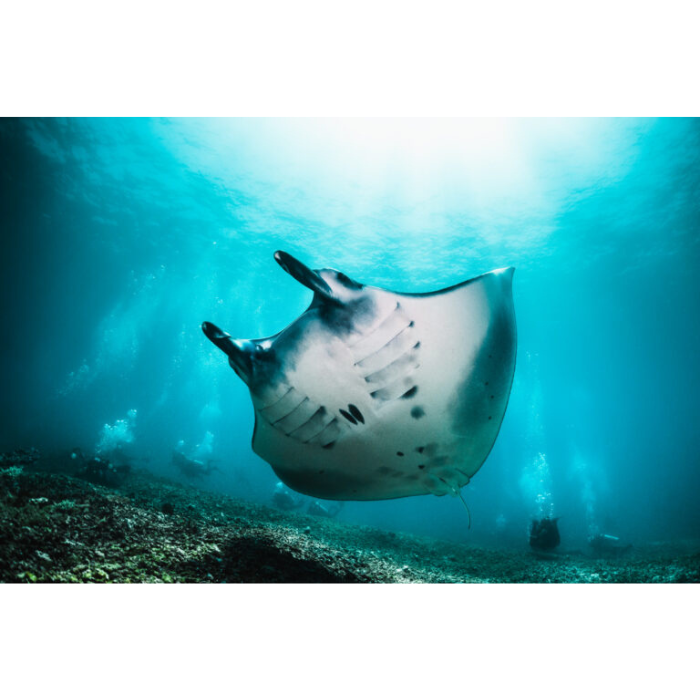
Sexual dimorphism (the systematic difference in form between individuals of different sex in the same specie) is very common in the underwater world.
Among the most sexually dimorphic of all cetaceans, we find sperm whales, where a mature male can be 40% larger and three times heavier than a female. Size is not the only thing that highlights this dimorphism but also their behaviour and way of life are different: while females live in groups with communal care of calves, and they are more social than males, male sperm whales are solitary nomads that occupy water from the equator to the polar regions.
Females reach sexual maturity at 9 years, and they can conceive right after reaching the mature age. They normally reproduce once every five years, with 14–16 months of gestation. When it’s time to mate, the male has to cruise the open sea in the hope of meeting a group of females somewhere, one of which is ready to breed.
Why is the sperm whale’s head so big?
Looking for a partner to mate with is not an easy task for someone who is travelling 5000 km a year on average, but here comes the usefulness of the very big head that males have: this other important sign of sexual dimorphism has been used especially as an acoustic organ. Through the echo localization, sperm whales can easily communicate and find other individuals of the same species. When a sperm whale is feeding, it is constantly emitting clicking sounds to find prey, but in this way also another sperm whale can understand where the first one is located.
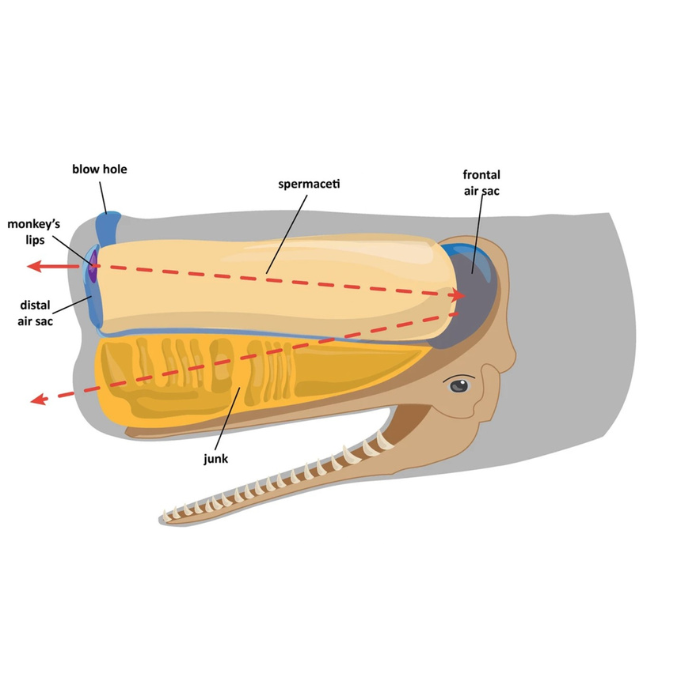
Thanks to the size of the spermaceti organ (organ contains a waxy liquid called spermaceti, involved in the generation of sound) and the junk, the sound production and processing is facilitated. The spermaceti organ in males can be up to 30% of its body (only 20% in females) and thanks to the size of it, males can produce very loud sounds (louder than those produced by females), used for attracting mates, repelling competitors and stunning prey.
For those who have always thought that the ocean is a silent place, this is an example of how this is not true. Nowadays, oceans are also far noisier than they were in the past: ship traffic, gas drilling offshore, increased naval activity relying on sonar, have generally increased and organisms like sperm whale that are sensitive to sounds may be negatively affected by sound pollution.
To see how these great creatures behave underwater, and to hear a snippet of what it sounds when they are looking for love, check out the video below, featuring Steve Backshall:
Fig. 1 Sperm whale’s nose anatomy. Eguiguren, A., Konrad Clarke, C. M., & Cantor, M. (2023). Sperm whale reproductive strategies: current knowledge and future directions. Sex in Cetaceans: Morphology, Behavior, and the Evolution of Sexual Strategies, 443-467.